Rescuing animals, especially when they are several months old or older, means that you will never know how they were treated in their early formative weeks. Because of her fearful behavior, I thought that Louise might have been abused as a puppy. She came into our lives when she was 4 or 5 months old. Louise was fearful and shy from the moment we met her. Her foster said that she had a collar embedded in her neck and she was covered with Demodex (red mange). The rescue had liberated Louise and her sister, Thelma, from some guys in a pickup truck in the parking lot of a kill shelter down in South Carolina. Based on this story, I assumed she was neglected, if not worse, in her early months. Recently, I am rethinking that idea. I have been reading about the critical socialization time for puppies that occurs between 6 and 10 weeks. This is called the ‘sensitive period.” Before 6 weeks, puppies see everything in their world as good. This is the time that they associate smells and other things potentially as good stuff for the rest of their lives. Then around 5 or 6 weeks FEAR sets in.
In an article on early socialization, Dr. Sophia Yin, DMV, said that puppy’s need to be socialized as early as possible but definitely “before five weeks of age because by five weeks the puppy is showing fear responses to people, objects and other unfamiliarity around them.” She stresses that if socialization doesn’t start before 14 weeks of age “many puppies will be doomed to a life of fear” unless they go through a regimen of intense socialization. I wish I know this when I first rescued Louise because Dr. Yin’s message is clear, that socialization in the sensitive period “can be the difference between having a happy, well-adjusted dog to one who is fearful of people, objects, other animals, and various environments that we humans perceive as safe.”
You can read more regarding one of the most important studies done around early socialization in different breeds detailed in the book ‘Genetics and the Social Behavior of the Dog’ by John Paul Scott and John Fuller, published in 1965 (Scott and Fuller, 1965).
Louise 1st Photo
Instead of early abuse, maybe Louise was not socialized during her most sensitive development stage and that is why she developed her life-long fears. Louise is leash aggressive and afraid of strangers, both human an canine. Though I have worked with her to manage her behavior in stressful situations, it would really help if I understood the root causes.
When you rescue, it is rare to know what happened during that critical puppy time. Maybe when she was still little there were additional things I could have done to change that fear imprint. Over the years, I have done much to quiet her fears and provide a safe and supportive environment in which she has flourished. She is a very happy dog at home but fearful, especially on a leash, and needs special attention. Are there ways to undo the emotional damage in dogs?
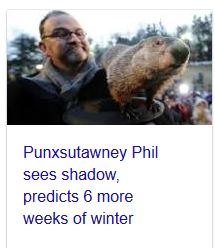
They are such funny weather predicting creatures, these ground hogs. They have names like woodchuck, land-beaver, and whistle-pig. Our regional prognosticator is name Punxsutawney Phil. He’s known as the “Seer of Seers,” the “Prognosticator of Prognosticators” and the “Most Photographed Pennsylvanian.” People in Pennsylvania dress up in top hats and tails and have this whole big event each year to see if we are going to have an early spring or late winter. Leave it to a rodent to let us know.
Charles, formerly known as Chi Chi Forest, is officially joining the DogDaz Zoo this afternoon. It has taken what feels like an excruciating amount of time to go through the adoption process with the SPCA of Anne Arundel County, but finally, he is ours. Louise and Sofie passed the meet and greet with flying colors. I think I was the most nervous of them all. Charles is an 8+ year old long hair Chihuahua / maybe Pomeranian mix. I guess we will all be learning a lot about little dogs.
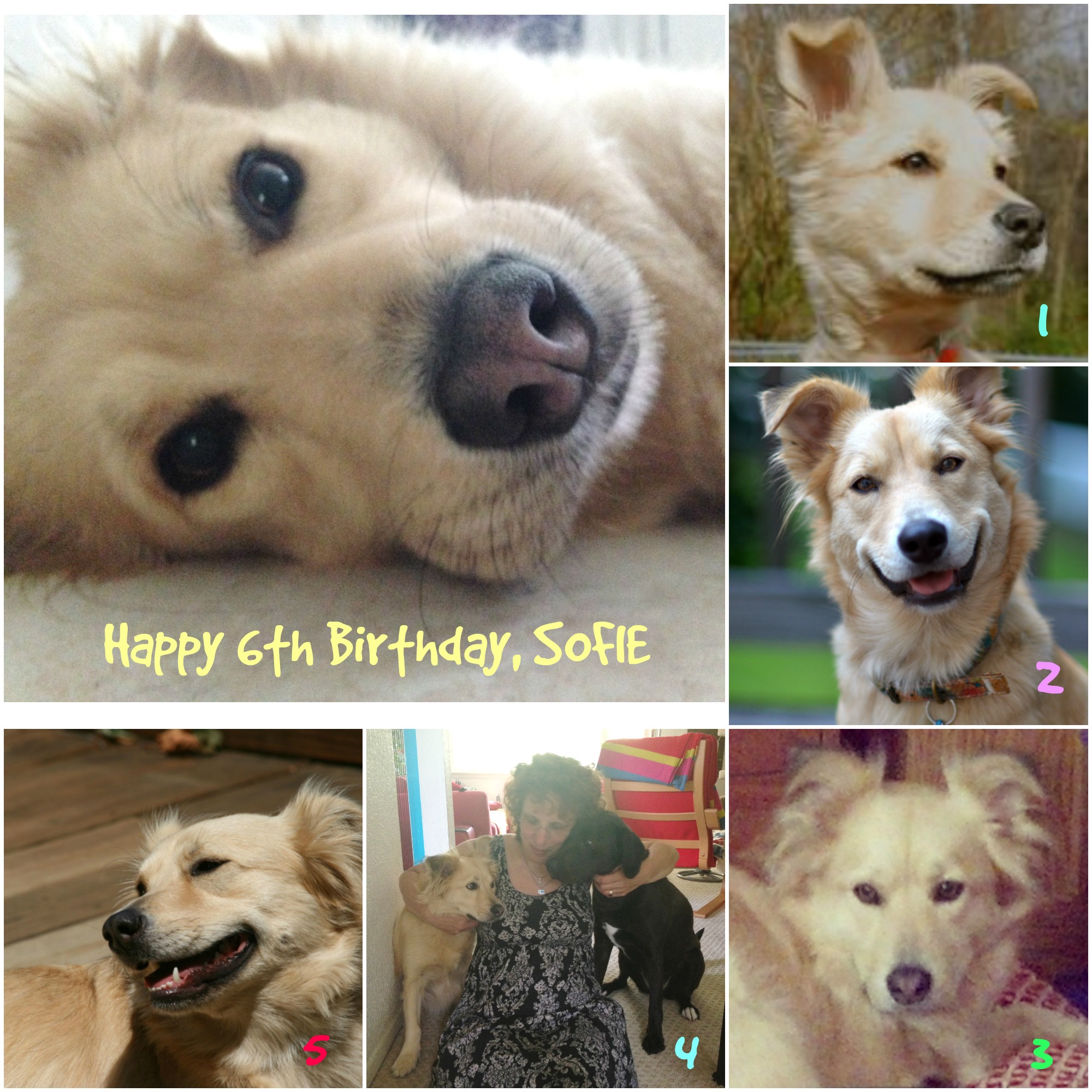
It has been an amazing 6 years with Sofie Bear. She came to us a puppy full of spit & vinegar. The rescue thought she was a Collie/Shepard mix and would be about 70 lbs. Looking back she was probably older than 12 weeks when we got her because she stayed small. I think she is a Sheltie/Mischief mix.
Sofie was a smiling, stubborn, and playful puppy. She always had an independent streak and was head strong. She and I did lots of training in the first 3 years.
It is hard to remember, because time goes so fast, but it was somewhere around 4 years old that her night terrors and separation horrors started. That changed her a lot. But this year we finally got things under control with love, medication, and more love.
Sofie is my silly, rolly-polly, best friend, bundle of fluff (who happens to have some door eating and thunder storm issues). She has taught me patience, unconditional love, and mostly to see the world through the simple heart of a trusting soul.
The wind was howling at about 50 miles per hour. We went to the park anyway. The wind is ‘nature’s rake’ when it comes to leaves – blowing them everywhere. The street in front of the house is clear now thanks to the wind (but you should see the lawn). Sofie couldn’t stop barking with all the whistling through the trees. That isn’t static in the video, it is the wind. Doesn’t it sound like the ocean? Do your animals get agitated when the wind picks up? That my friends is the negative force of POSITIVE IONS.
The force of the wind causes positive ions, which can make people feel jittery. And if people feel it, I assume the animals do too. A positive ion is a carbon dioxide molecule that has been stripped of an electron (Note: science can be fun!). There are many studies that have found that positively charged ions have a negative effect on people. It is believe that positive ions contribute to everything from asthma to anxiety and depression.
Sadly, our modern day environments (tightly sealed homes, office buildings, malls) created tons of positive ions. Fluorescent lights, electrical equipment, computers, printers, televisions, clothes dryers, and even synthetic fibers in our clothes, carpets, and furniture, all contribute to this problem. Hair dryers and electric heaters are huge emitters of positive ions! How many times have you gotten shocked when petting your animal? STATIC = positive ions.
The opposite of positive ions, as you would expect, are NEGATIVE IONS. You find negative (what I call ‘feel good”) ions in nature. Large areas of water, for example, make people feel good. I think it is because of negative ions that people flock to the ocean and places like Niagara Falls. Negative ions are attracted to airborne particles, like dust, mold, viruses even, and they make them heavy so they fall to the ground.
Now before you go out and buy one of those expensive negative ion generators**, fill your home and life with things that generate negative ions. We have a lot of fountains with running water (also known as cat watering stations) through out the house. I run humidifiers. Water water everywhere.
I think that the reason shopping malls tend to have large fountains in the center is based on my negative ion water theory (I need to ask an architect about this). The stores are giant generators of positive ions because of the lighting, synthetics, traffic, etc. I know because a million years ago, I managed a clothing store in a mall. Every winter the plastic hangers would break constantly because things were dry, full of static, and brittle. A center fountain in a mall or office building might do a little bit to make people feel better. Crazy maybe, but I believe it.
** I never used (or could afford) a Negative Ion Generating Machines, but I think it would have to be the size of a room in my house to counteract the positive ions generated by everything else. I chose the water route. Maybe you have had a ‘positive’ experience with those machines, if so, let me know.
How does the wind effect your fur babies? Did you get blown away this week?
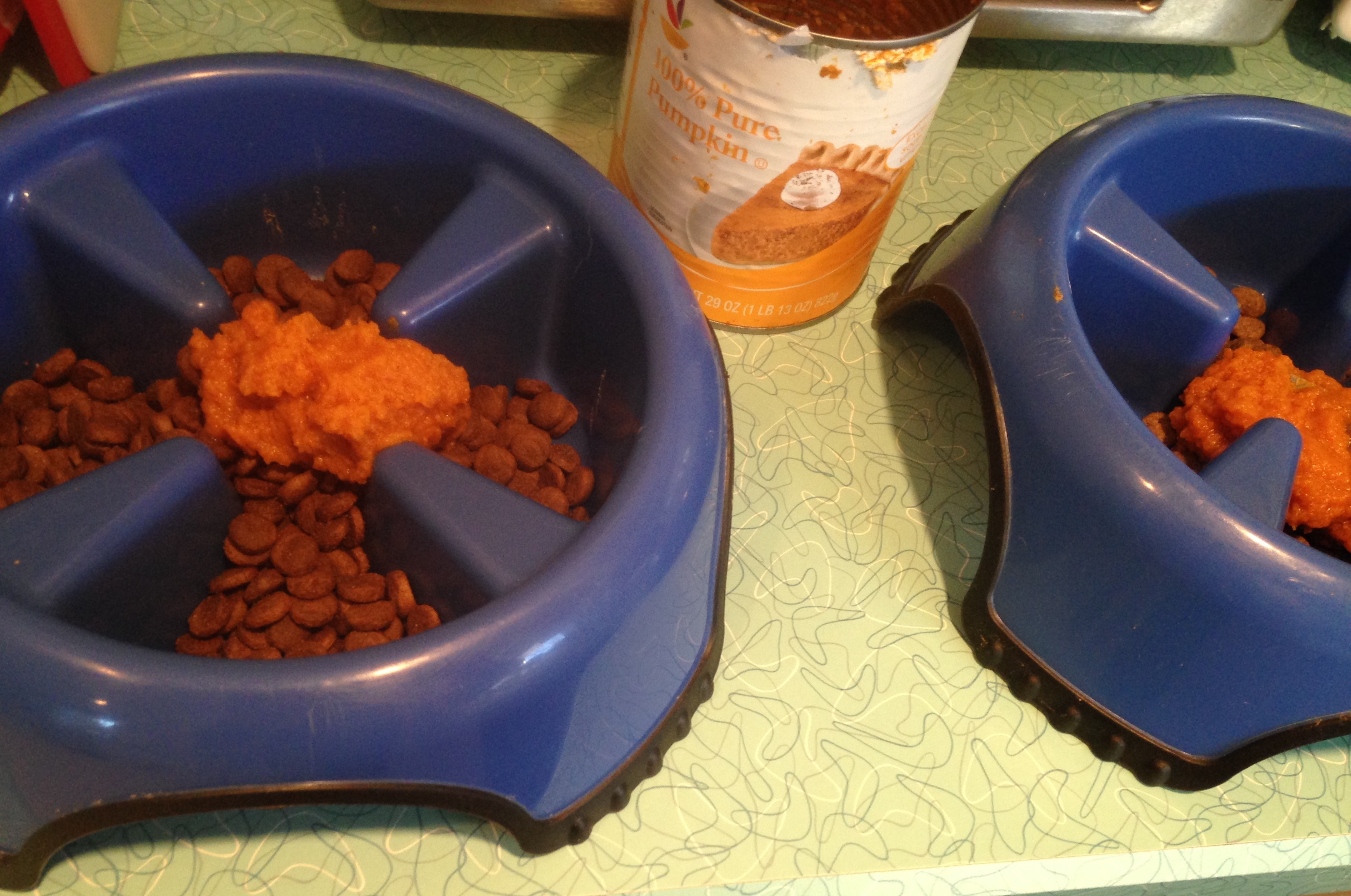
One of my coworker’s dog just had surgery for his other ACL (he is doing fine), but she told me that the dog is crated and on meds and is having trouble going potty. Of course the first thing that comes to my mind is PUMPKIN. This made me realize that maybe I should share with all my readers the remedies that I have used over the years. Since Louise has colitis, she goes back and forth with the consistency of her bowel movements. I find that pumpkin actually can work both ways, help them go, or go less. Here is my list of remedies for constipation. Add any ones you can think of into the comments.
1. Pumpkin: I feed the dogs pumpkin regularly. A tablespoon in their food is all they need. Make sure to use 100% pure pumpkin, not pumpkin pie mix (which contains a whole bunch other stuff especially sugar). When I make dog food, pumpkin is a main ingredient,
2. FiberSupplements: For regularity (we do this for the cats), add fiber, like Metamucil, to their water. There are many over the counter fiber supplements that could work. Check with your vet to see what she recommends and also for how much per pound of the animal.
3. Bran: You can try any kind of bran: rice, oat, wheat. This is one one of the most common remedies for animals and humans when it comes to constipation. I used to give my dogs wheat bran but I soaked it in chicken broth first, so that it was more easily digested and flavorful. Again, ask your vet how much bran per pound of dog.
4. Browm Rice: Did you know that brown rice is much more beneficial than white rice when it comes to fiber? You can sprinkle some on top of your dogs food with each meal.
5. Vegetables and Fruits: When not giving the dogs pumpkin with there meal, I give them either green beans, carrots, or peas. I buy the NO SALT cans (sodium is really bad for dogs) and wash the veggies well. This is just another source of fiber to keep it all pushing along. Louise doesn’t like fruit at all but Sofie loves cantaloupe. I know people whose dogs love apples. (Just make sure to remove the core and the seeds, because the seeds contain bits of cyanide which can be toxic.). Also try unsweetened apple sauce; Mojo and Zelda’s Mom freezes the little apple sauce cups and gives them as an alternative to Frostypaws.
6. Mineral oil: Mineral oil can get things moving but don’t give it directly. Make sure you put it in food. I give 1 tsp for 10 pounds of dog weight, but check with your vet.
7. Exercise: There is nothing like getting the blood flowing through exercise to help move things along. Take Fido for an extra long walk if you can.
8. Laxatives, Milk of Magnesia, or other medications: Some vets may advise a mild laxative or other medications. If it gets to this point, listen to the doctor.
There are many reasons why our furbaby’s get ‘concentrated.’ Hopefully some of these ideas can help loosen things up.










 DogDaz Zoo