It took months, but I am glad to say (knock wood) that the current medicine, Clomicalm (1/2 tab 2X a day), is allowing her to sleep through the night. (Also using Adaptil spray on a bandanna every 4 hours.) When she sleeps, Mommy sleeps (thank you thank you thank you). She is known to break through all previous medicines, so I want to give it several weeks before I jump up and down with joy, but a few days of sleep, especially through the blizzard last weekend, makes a world of difference. Understand that sleeping does not mean she is not anxious; just this morning, when I awoke at 5 AM, she was lying in bed panting. There were no stressers that I was aware of, so I am still perplexed.
Now that we are sleeping better, I can start to address some of her stress behaviors and see if we can get separation anxiety, barking her head off at everything, and cat chasing, under control. The Behaviorist has no recommendations at this point, so I guess I am on my own. Gosh, I love this dog and have every hope that together, with modern chemistry, and significant love and training, we can find peace once again.
I need your help. Sofie’s anxiety is off the charts. I have had her to several Veterinarians, a Behaviorist, and now they are recommending a Neurologist and MRI. I am at my wits-end trying to figure out how to help her and I don’t get much sleep anymore (that video above is at 2:06 AM). She appears to be in an ongoing state of anxiety or pain.
Months ago, with help from a holistic Vet, we tried lots of different Chinese herbs to calm her separation and thunder anxieties, Back in June, Sofie ate through a door. We tried Xanax which actually made her hyperactive, None of the herbal remedies seemed to touched the surface for more than a few days. You may notice in the door vs thunder storm picture, she was wearing her Thunder Shirt while she ate the door. Yes, I have had her in one for years.
Around October, Sofie started waking me multiple times during the night with whining and barking. I likened the event to ‘night terrors’ (like when kids have nightmares). When this first happened, I started taking her from the bedroom into the den where she and I would go to sleep on the couch. No amount of Shen Calmer, Composure Pro, or Pheromone spray was helping to stop these events. I needed to do something different.
In December, I decided to go back to the Vet that handled 2 of my previous dogs (Nikki with a brain tumor and dementia and Squash with insulin diabetes). I always felt he was a good diagnostician and the only reason I changed Vets originally was because I had moved about 30 minutes away and wanted someone closer to home. After taking a bunch of tests, he put Sofie on Prozac for a few weeks (which did nothing) and then we moved to Phenobarbital. He was thinking that maybe the night awakening was some kind of seizure. She did sleep for a few nights when we first started but then her night problems broke through. I adjusted the meds as directed, but still she had night terrors. We keep doing blood work and tests and meds changes, but still she has this problem at night and during the day sometimes.
Last week I decided to try an Animal Behaviorist. Sofie and I traveled 2 hours to consult with this person.
The Behaviorist felt that Sofie was very stressed out and that it must be caused by the years of wrong training I have given her, both regular basic obedience and especially the e-collar training. She told me to stop talking to Sofie in any way (no commands, no reprimands, don’t look at her). She asked me to remove Louise and the cats from the house to see if they were the problem. She recommended a bunch of changes: stop socializing with other dogs, don’t let her around children (which she never was anyway), stop letting her go to daycare, ignore her when coming and going, if I am not home have whomever is home leash her and give her treats when she is screaming for me, toss food at her to stop whining, stop all obedience commands, stop verbal or physical punishment (I assume she meant the ecollar since Sofie was never physically punished), interrupt all barking by using the head collar and pulling her toward me and feeding her, stop all cat chasing by blocking with a board, block all windows so she can’t look out, stop feeding her in a bowl and reward her 30 to 40 times a day for coming when called, stop talking to her, stop letting her go to the fence in the yard and bark, pen her at night and if she barks in pen throw treats, when watching TV pen her and give her a feeding toy to stop her from barking at me. And begin a noise desensitization program with thunder sounds and barking,
All this made me feel like I am a terrible pet owner (I am publicly sorry to the 29 other pets I have had in my life) but I accepted that every dog is different and since I was paying her to help me find a way that worked for Sofie, I was going to listen to her advice. Immediately last week we started implementing her suggestions.
To rule out medical issues, the Behaviorist suggested I have Sofie’s Thyroid checked. She feels that Sofie is obese. (Which has me concerned because all her recommendations are food based.) I went and had blood taken the next day (T-4 test), which came back low. Today, I went and had more blood work done so we can see how low it really is. Sofie was so anxious when we got to the Vet that she tried to eat the window blinds and jump out the office window. I have never seen her do this stuff before. It just keeps getting worse.
Since I went to the Behaviorist last week, Sofie’s behavior (especially the whining and night waking) has escalated to a new level of crazy that I have never seen before. Is this a reaction formation to trying to change her behavior or progression of a fast moving disease?
Did I tell you that Sofie won’t go with the Dog Walker anymore if I am home. That started about a month ago. She hides in my office and refuses to go. (Lucky Louise gets a walk all by herself). I was able to trick Sofie at first, I would make like I was going to walk with them, but now she knows that I am not really going and won’t budge. She gladly goes if I am not home. Separation anxiety? Maybe Rachel walks too fast for Sofie and she doesn’t want to go because it hurts her joints?
A few nights ago I changed the room I sleep in to see if the night problem was environmental (and because she was disturbing everyone that was sleeping). The first night she slept, then she didn’t, then she did. Clearly this is not separation anxiety, as she is lying right next to me on the couch and still waking multiple times with cries, whines, and ultimately barks. She is not allowed on my bed in the bedroom, but I do allow her with me on my den couch, so I was thinking the closeness would help her. But NO!!
By the way, Sofie hates this nose collar the Behaviorist recommended we use. It is suppose to give me more control of her in the house (so I can turn her head gently when she is barking and give her treats). I get the concept but at this point, I don’t think it is making a lick of difference. On a positive note, she is sucking on fabric things a little less; at least that is a step in the right direction. You might remember that she always has to have a lovey or something to suck on.
After I reported that things are getting worse to the Behaviorist, she said maybe the problem isn’t behavior after all but medical. She wants me to stop everything she told me to do (except for the cat chasing). I am losing my mind with all of this (and going broke)!!
Just in case it is joint pain, I added Dasuquin to her meds. A few times last week I noticed her limping when she would get up from the dog bed in my office. Is this a response to all the meds, the weather, something else?
Today the Vet discussed having an MRI to see if she has a brain tumor, but if she does, there would be little that could be done to help her. He changed her from the Phenobarbital to Clomicalm. Hopefully, if I give it to her shortly before bed, we might get through the night.
Does anyone have any thoughts? Medical or behavior? This is starting to become a quality of life question, hers and mine. – Lorian, desperate DogDaz Zookeeper.
Sometimes I forget that human food can be dangerous for the dogs, even in small quantities. I decided to type up my list as a reminder and keep it in the kitchen. Please help improve my list by adding any toxic foods that you think I have missed. This list is for dogs. I think I will start one for the cats too.
TOXIC FOODS FOR DOGS
Onions: Both onions and garlic contain a toxic ingredient called THIOSULPHATE. Onions can be fatal in one large dose. Garlic, on the other hand, is less dangerous and would need to be consumed in a very large quantity to be toxic.The toxin does build up in the system and can be fatal when consumed repeatedly over time.
Chocolate: The toxic ingredient is called THEOBROMINE. Dogs can not process this toxin and it can build up in their system. The hazard for dogs depends on the TYPE OF CHOCOLATE, the AMOUNT consumed, and the DOG’s SIZE. In large amounts chocolate and cocoa products can kill a dog. A single piece probably does not contain enough theobromine to harm a dog, however, if a small dog eats a box of chocolates, you should get her to the vet immediately. Don’t wait. Different chocolate types have different theobromine levels. COCOA, COOKING chocolate and DARK chocolate contain the highest levels, while milk chocolate and white chocolate have the lowest. It can take only a small amount of DARK chocolate to poison a small dog. Less that an ounce of dark chocolate may be enough to poison a 44-pound dog (according to the Hill’s Science Diet website).
Grapes and Raisins: The toxin in grapes is unknown but it affects the dog’s kidneys.
Most Fruit Pits and Veggie Seed: Seeds contain a toxin called CYANOGENIC GLYCOSIDE, which causes Cyanide poisoning. The body of the fruit or veggie is fine, just not the seed or pit.
Bones: Most cooked bones should NOT be given to dogs because they splinter. This means they can cause lacerations of the digestive system or become lodged in the dog’s throat. Especially don’t give them cooked chicken bones.
Yeast Dough: This can produce gas and swell your dog’s stomach. It could lead to rupture of the digestive system.
Alcohol (Beer, Wine, Liquor): This can lead to coma or even death. Beer is from hops and Wine from grapes; both are toxic to dogs.
Persimmons: Can cause intestinal blockage
Salt, Baking Soda, Baking Powder: In large enough quantities can cause an electrolyte imbalance. A severe electrolyte imbalance can lead to muscle spasms or even congestive heart failure.
Nutmeg, Mustard Seed: Causes tremors, seizures, and nervous system damage.
Avocado: All parts of the fruit are toxic to dogs.
Macadamia, Pistachio Nuts: Are very rich in fat which can give your dog a major upset stomach and may cause pancreatitis. These nuts are also reported to contain an unknown toxic principle that may result in neurological symptoms.
Walnuts, Pecans, Hickory Nuts: These nuts contains a toxin called JUGLONE which can cause a vascular disease in horses known as laminitis and causes gastric intestinal upset or an obstruction in dogs (but interestingly does not effect cats). Moldy walnuts or pecans can contain TREMORGENIC MYCOTOXINS which can cause seizures or neurological symptoms.
Vitamins for Humans: Especially those containing iron, can cause kidney and liver damage.
Puppy Sofie coming home in a large tub because I didn’t have a carrier.
My coworker rescued 2 cute beagles the other day and asked me what I recommend he does to get them settled. Well, that made me think about all the things I wish I knew with my first few rescues. I started to put together a list that I thought maybe you all could add to and comment on. What would you tell a new rescue owner (these dogs were not puppies (which has its own set of issues))? These are in no particular order except for the first one (I think that patience is the most important thing!) What do you think is important?
Patience: The dog does not know you and you her. Do not expect her to trust you or understand you yet. Just like in any relationship, it takes time to build a rapport. Give your new friend space and time, and things will grow.
Accidents Happen: Count on a dog marking or having accidents the first few days, even if he was housetrained. Have pet-specific cleaning products on hand. Also be prepared for other transitional behavioral problems.
Positive Reinforcement Works: No one training approach is right for every dog. There are a variety of approaches based on positive reinforcement – the essence of effective training and behavior modification.
Start day one by teaching your dog appropriate behavior through consistent, positive reinforcement.
Don’t Lose Them: Keep an ID tag attached to a snug buckle collar at all times. When you first get them they are more likely to run because they are scared.
Get them microchipped.
Be The Leader: During the transition period, the dogs need time to adjust to the rules and schedule of your household. And s/he needs your leadership! A dog is a pack animal looking for guidance, and it is up to you to teach good, acceptable behaviors. If the human does not take charge, the dog will try to.
Be Consistent: Dogs are creatures of habit. A consistent routine for feeding, exercising, and potty time will help your dog adjust.
Supervise or Restrict: A dog cannot do damage unless you let that happen. Watch your new dog during the transition period. When you can’t supervise, keep them in a kitchen, crate or other secure area with chew toys.
Keep dogs on-leash when outdoors in unfenced areas. Otherwise, you’ll have no control if your dog obeys instinct and chases a squirrel into the street…tussles with another dog…or runs after a child.
Supervise even when the dog’s in a fenced yard. If there’s a way to escape, most dogs will find it.
First day home 3.9.11
Don’t Assume They Were Trained or Socialized: Many adopted dogs have not had the luck to be socialized yet. Their baggage may include unacceptable behavior. Re-educate your dog with the help of books and qualified professionals.
Do not keep dogs in dark, damp basements, garages, or non-family areas; this thwarts your efforts to raise a socialized, well-behaved, house-trained animal.
Establish Who Is Boss: Don’t kiss your dog or place your face at the dog’s eye level before you’ve begun obedience training and established yourself and other humans in the home as higher up in the hierarchy. Dogs often perceive a face placed at their eye-level as a threat, and then bite.
Beware of letting your dog on your bed or furniture if you haven’t established all human family members as the leaders (“alpha”). Dominance-related problems often arise when a dog is on a higher physical level. Dogs don’t seek equality; they seek and need leadership.
Give Clear Instructions: Don’t issue a command unless you are in a position to enforce it. Telling a dog to do something, then not guiding him to obey if he chooses not to, teaches him to ignore you.
Beware of sending mixed signals that bad behavior is cute or entertaining.
Teach dogs good house manners from the start.
For the first few days you have a dog, keep him or her in the same room with you – so that if the dog needs to potty, you can rush him outdoors…and so that if he engages in unapproved behavior, you can instantly correct the dog and substitute a more positive behavior. For example, removing the shoe from his mouth, then substituting a toy and praising.
Be Selective With Treats: Avoid using overly desirable treats such as rawhides or pig hooves. Dogs will often fight with each other over them, and even attack people they perceive might desire their treats. Rawhide is also very hard on their tummies. I give them deer antlers (expensive but worth it).
Play nice: Don’t play tug-o-war, rough-house, or engage in other combative play. These practices may encourage aggression in a dog you do not know well and teach your dog to challenge you.
Realize there is always a solution to any problem – read and consult trainers.
Changing a dog’s name: A dog can learn a new name quickly if you use it consistently. Start by linking it with the previous name, if you can for a while.
Limit Visitors and New Stuff: A new dog feels bewildered and stressed by all of the changes, so surrounding her with too many people might cause her to cower or nip. So delay introductions to friends and neighbors until the dog has had a chance to settle in. (However, you can start obedience classes with a trainer right away.)
Make introductions one at a time, on leash for control. Exercise and calm the dog before meetings, and have treats handy to shape and reward good behavior. You may want to have the dog on leash so that you can correct immediately as needed. Make sure the visitor is relaxed, and that you convey confidence.
The dog may want to sniff the visitor first, before any petting. Beware: if the guest is tense, the dog may sense this as a direct challenge. So set the tone with your actions and attitude – wait until you’re happy and relaxed. Read cues from your dog: how comfortable does she appear? Many dogs love new people, while others feel overwhelmed.
Expect your new dog to engage in behaviors you’ll need to correct, such as growling or jumping on people. Allowing a dog to jump on people is a common mistake, but to avoid exasperation down the line, teach your dog “off” from the start. In addition, don’t let anyone engage your dog in aggressive play such as wrestling, tug of war, or play biting.
Set Up Good Potty Routine: Take your dog outside as soon as you wake up. If you feed him in the morning, leave him time to relieve himself after breakfast before you go to work.After you return from work, take him out immediately to potty and exercise. If he has exercised heavily, wait an hour before his evening feeding. He’ll need another bathroom break anywhere from 30 minutes to several hours later depending on his age and habits. Go out once more right before you go to bed. Withhold evening snacks.
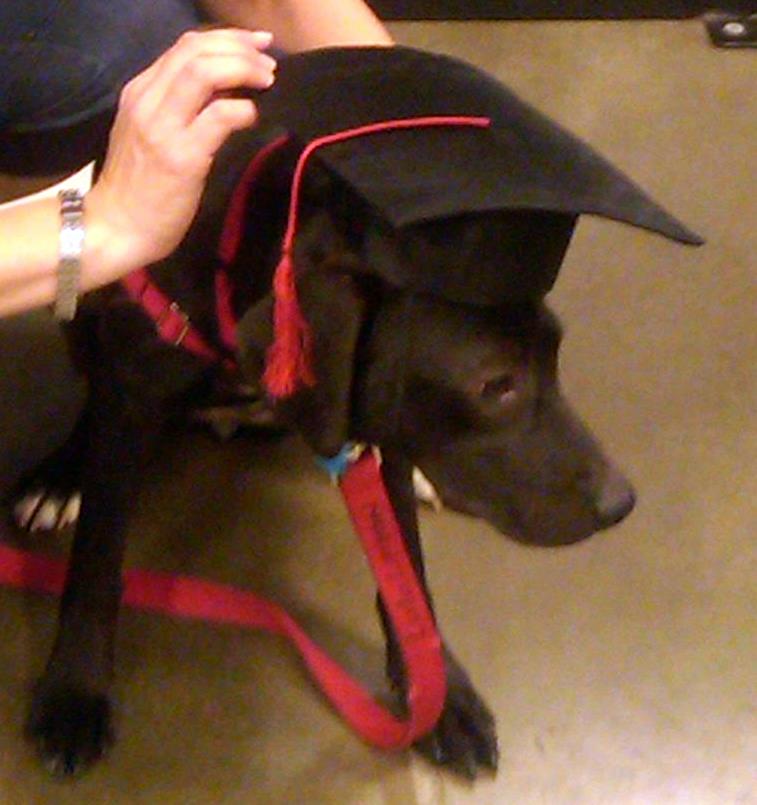
Lulu Graduation 2010
Teach Them That You Will Return: Initially, your new dog may experience separation anxiety when you leave. Using a crate can reduce accidents and other problems rooted in insecurity by providing a safe and welcome haven. Most dogs like cozy places, which is why you often see dogs resting under tables. Teach your dog from the start that “all good things happen in the crate.” Place nice bedding in the crate, along with dog toys that you can rotate for variety. Feed your dog in the crate. Give him praise and treats for venturing into the crate, and for resting there calmly. (One of my dogs loves her crate, the other will have nothing to do with it.)
You can also confine your dog in the kitchen or hallway using baby gates. Jumping dogs may require you to piggyback two gates atop each other.
Anxiety outlet: Try a Kong rubber chew toy that lasts a long time or a hollow marrow bone. Smear the inside with peanut butter and your dog will spend hours trying to lick it out. Add dry kibble for more fun.
When you get ready to leave, quietly say “good dog!” and provide a small treat. Don’t say good-bye; just leave. When you return, quietly praise the dog for being good and take her out immediately.
Make your schedule as consistent as possible. It is not fair to get upset if a dog has an accident after being left alone a long time. One popular solution: hire a mid-day dog walker. (I have had a dog walker for years and the dogs really appreciate the mid-day break. Then I walk them before dinner when I finish work.)
To work against separation anxiety, don’t spend a whole day with new dogs. This is a big mistake that dog adopters make.
(1) Have her bed, safe chew toys and water ready in the confined area in which she’ll stay when you’re gone – whether it’s a crate or in a gated-off kitchen area. Take her to that area, tell her to lie “down,” give her a chew toy and a treat and praise, using her name.
(2) Step away. If she remains quiet, good; don’t talk to her, because that will distract her from this desired behavior. Before she begins to grow restless, take her back outside again to play or walk.
(3) Return her to the crate, then go into another room for longer periods.
(4) Leave the house and come back in right away. Gradually make those trips longer and longer; vary the duration you’re out. Your dog will be less anxious as she learns that when you leave, you eventually come back.
Give her a treat while she’s in the crate, and talk to her while she is in the crate, so she’ll come to accept the crate. By being reliable, you’ll gain her trust – and teach her that you decide what to do.
In many cases it’s counter-productive to crate more than 5 to 6 hours after the transition period. But used properly, the crate is an excellent tool for you and comfort zone for your dog. My Louise sleeps in her closed crate all night (her choice), that is her happy place.
A tired dog is a happy dog. Before you leave your dog for extended periods, exercise her vigorously. Then, for 20 minutes before leaving the house, go about your business calmly – then just leave. Don’t make a fuss saying good-bye.
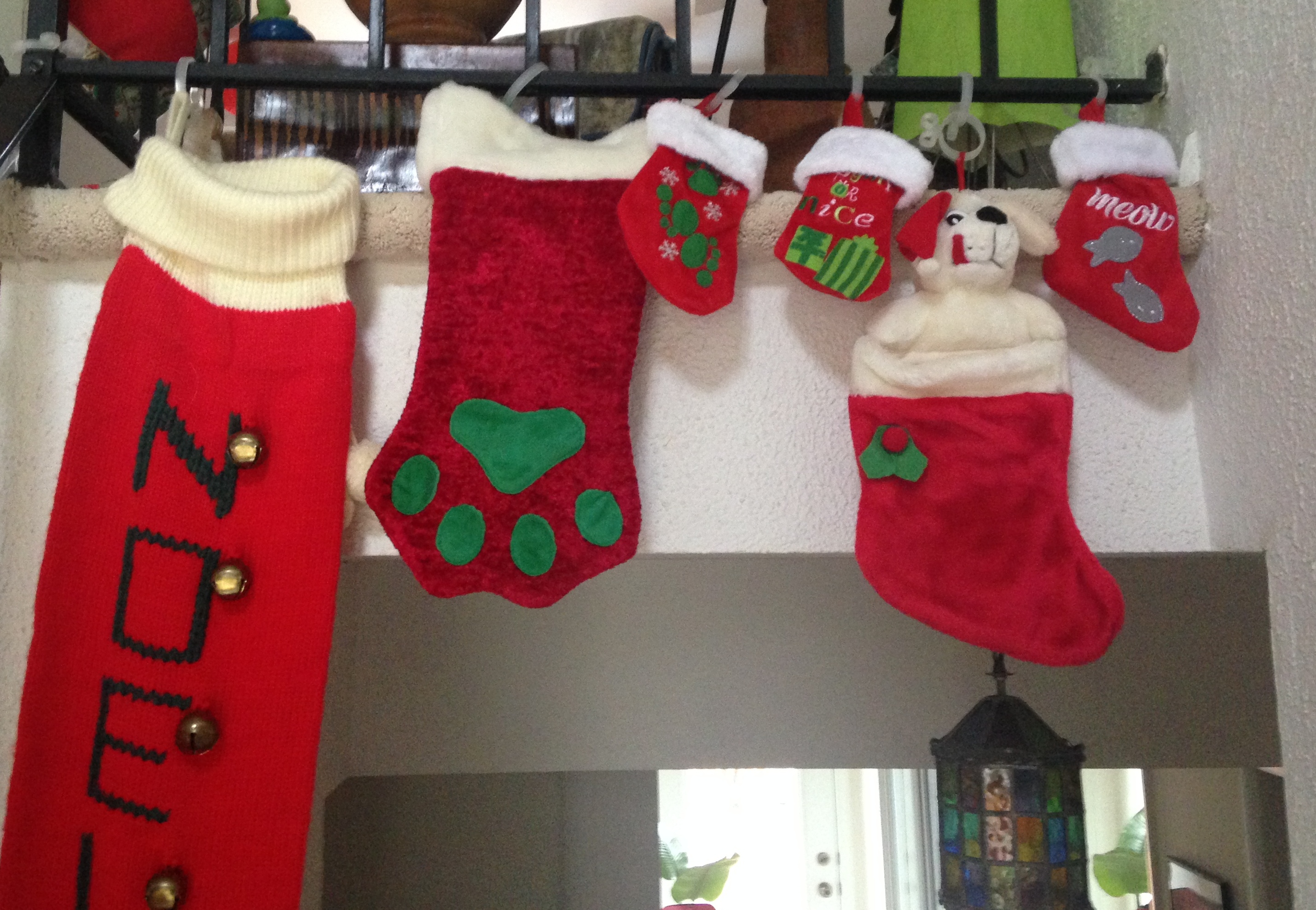
From our Zoo to yours, may 2016 bring you healthy, happiness, and lots of licks and love. We look forward to a wonderful blog year ahead with all our favorite dogs, cats, bunnies, guinea pigs, potbellies, and on and on.
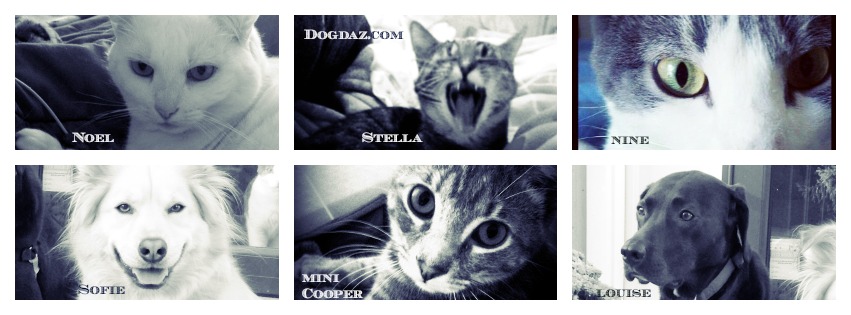
Your friends at DogDaz Zoo – Louise, Sofie Bear, Noel, Nine, Stella, and Mini Cooper
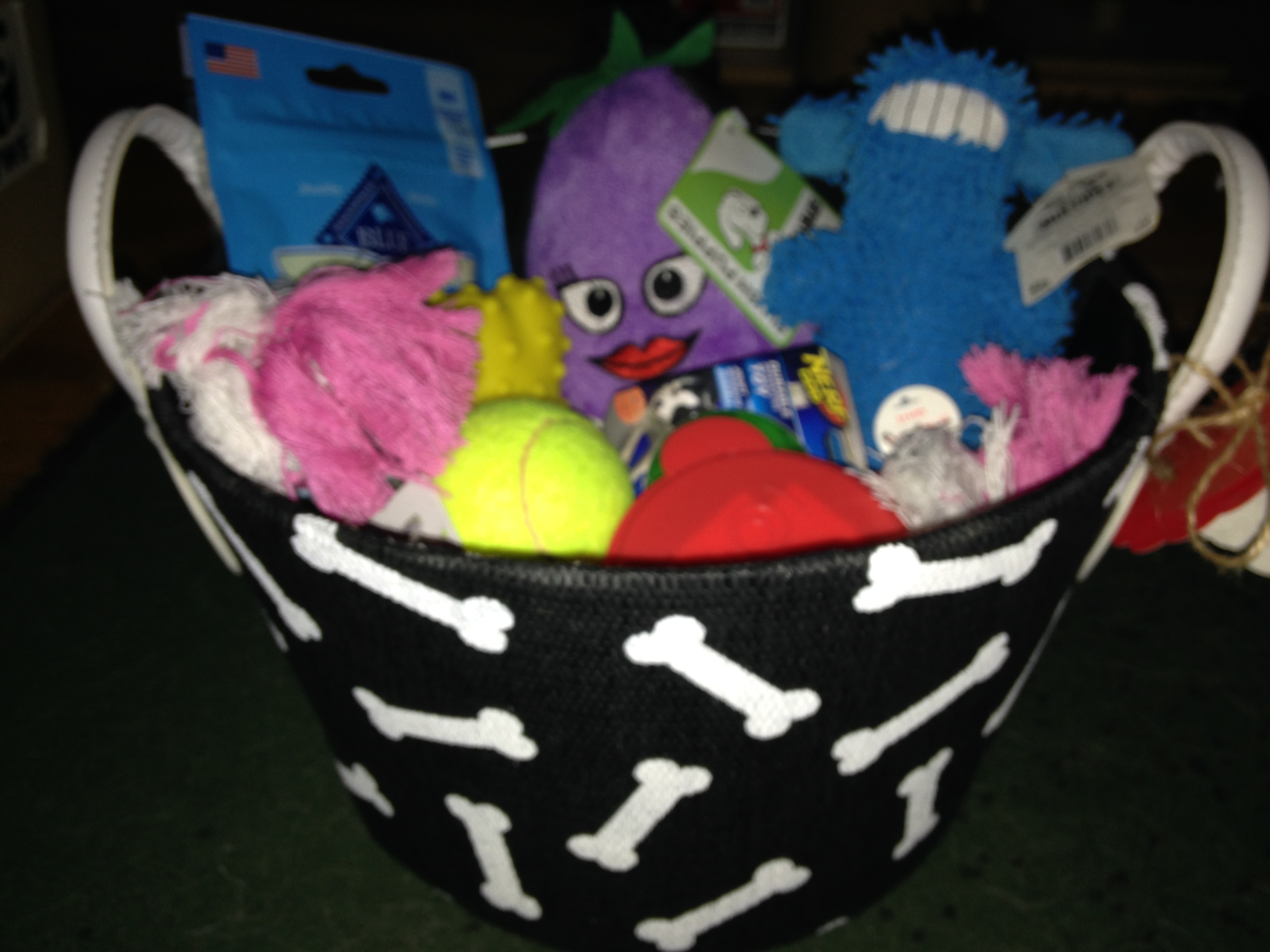
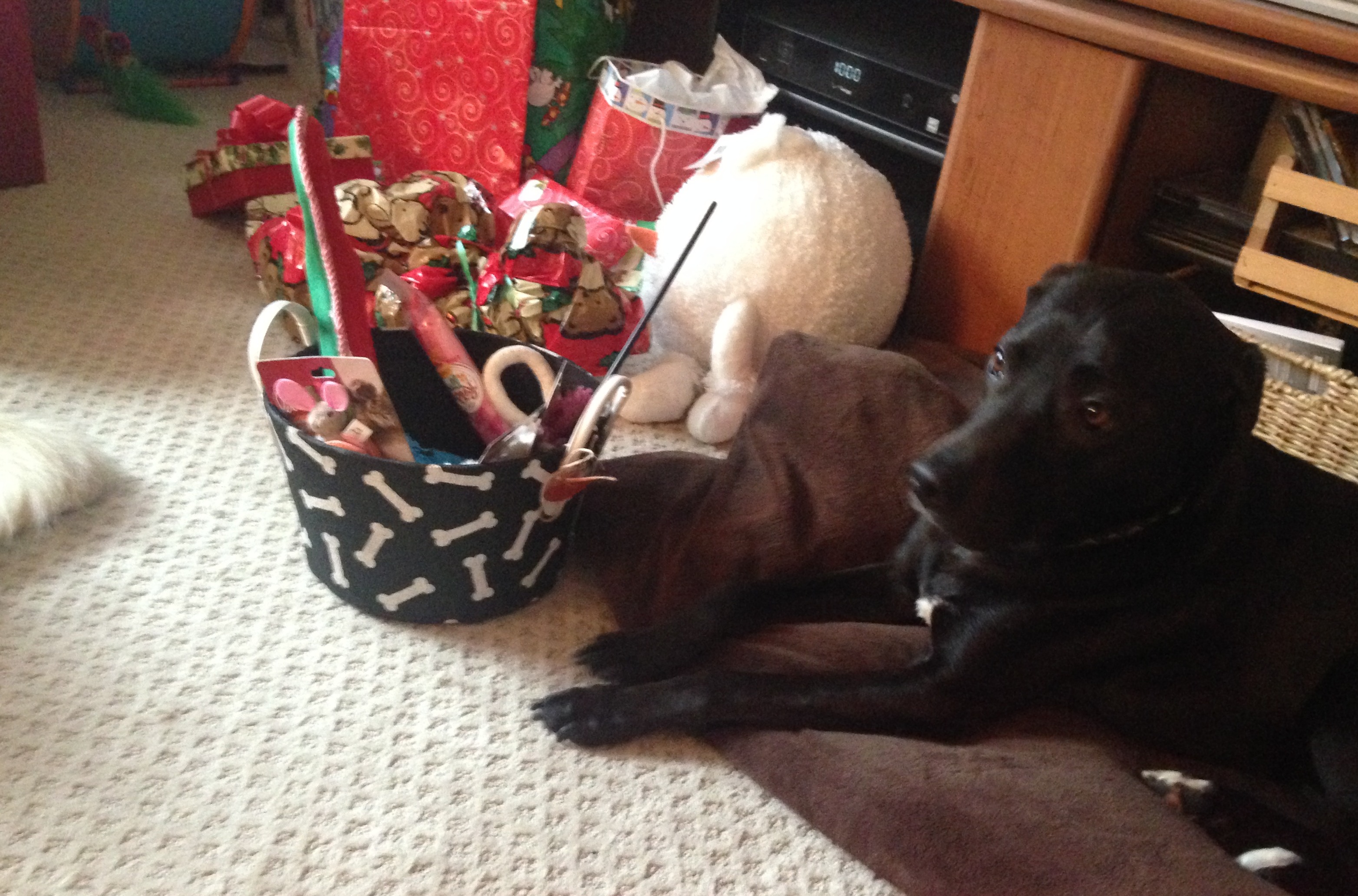
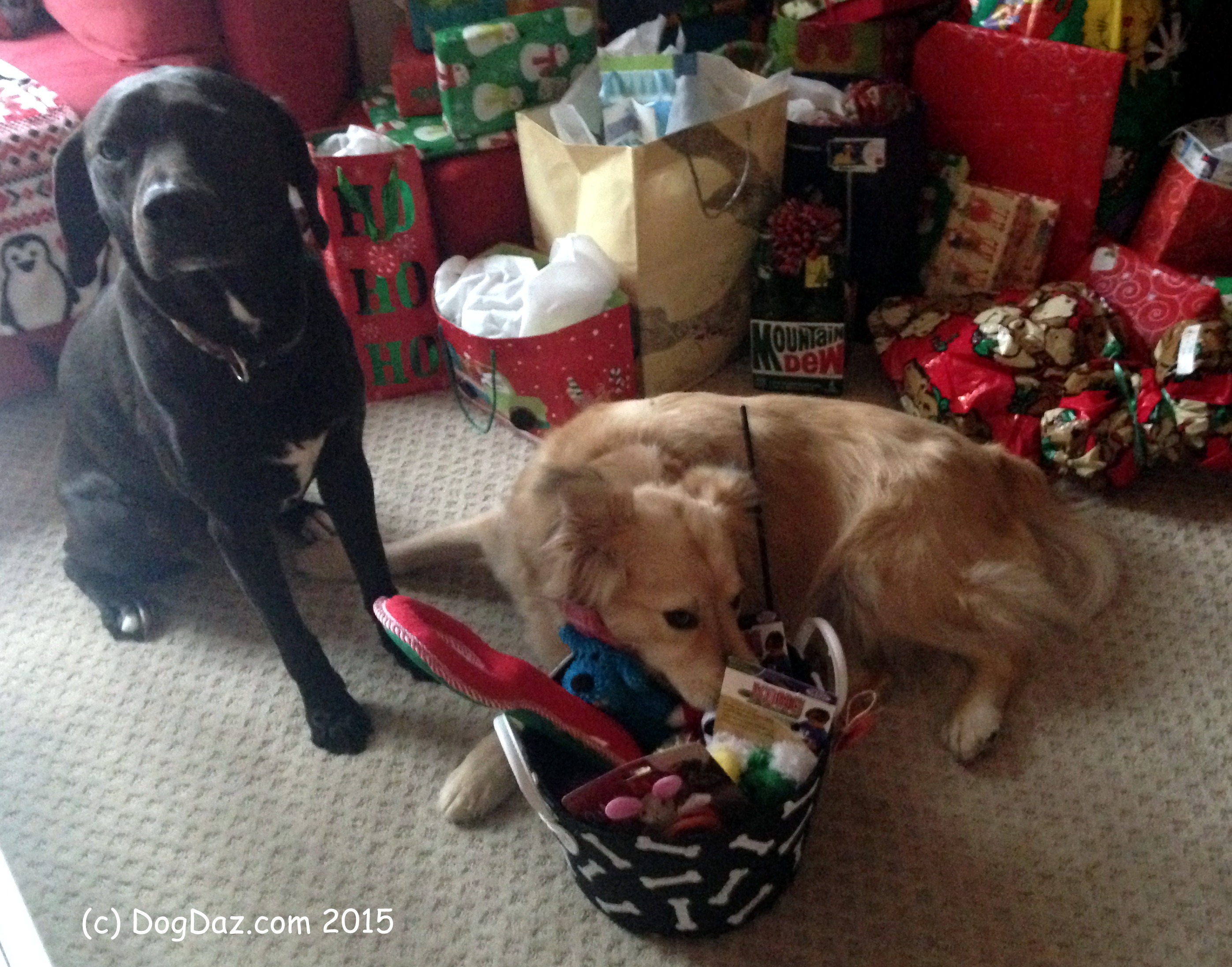
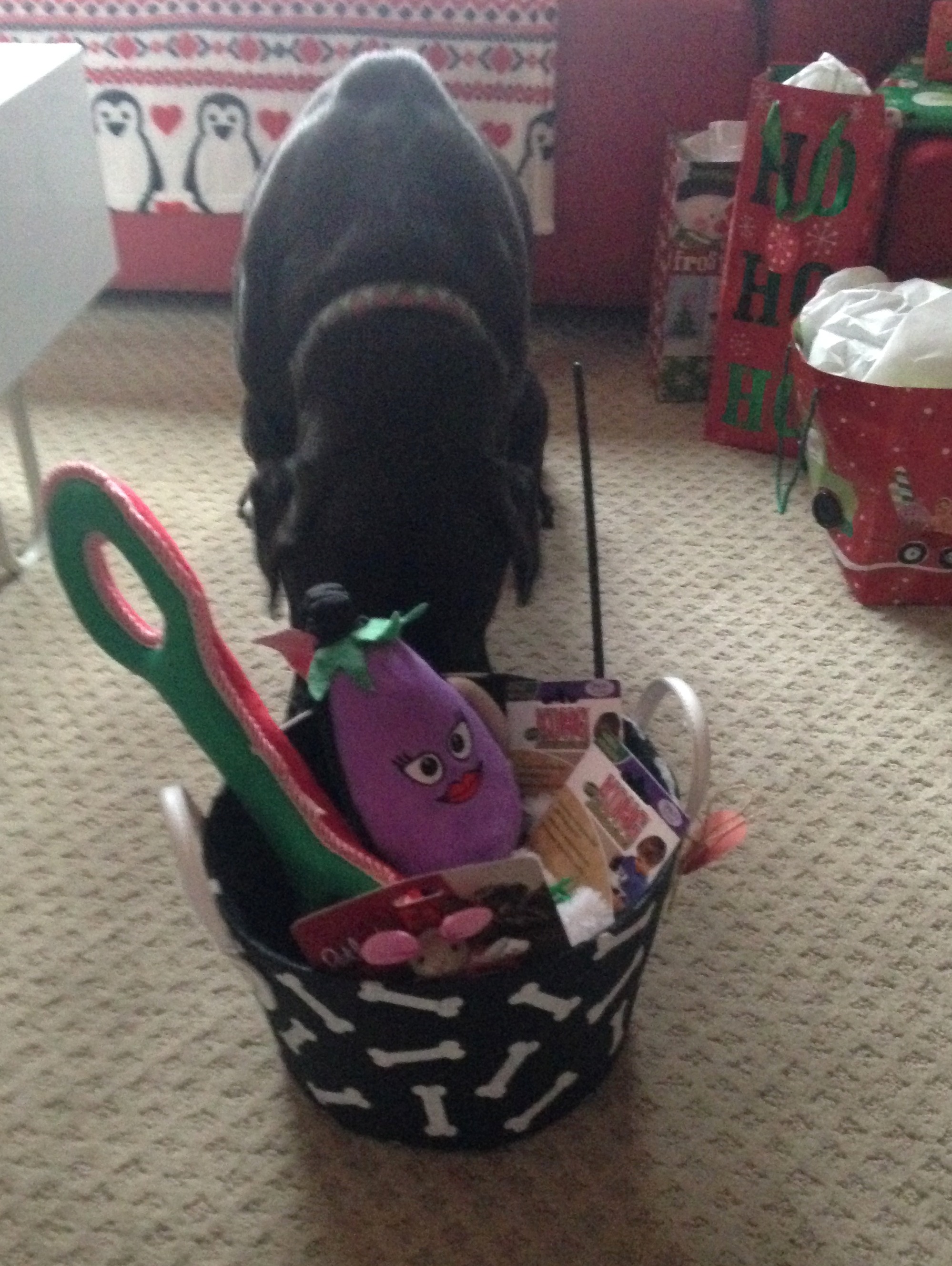
Rachel, our wonderful dog walker (Simplifido.com), who takes us out when Mom is working and feeds the cats if she goes away, gave us this great basket of cat and dog toys for the holidays. Santa (we know it was you Mom, we are not puppies and kittens any more) added a bunch of cat and dog toys to it. We were very excited Christmas morning to have a punch of things to play with.
Of course Sofie, the pushy whiney one, stuck her nose in first to pick out what she wanted. Some times I don’t know why I put up with it, but I do love her, even if she is a pesty little sister.
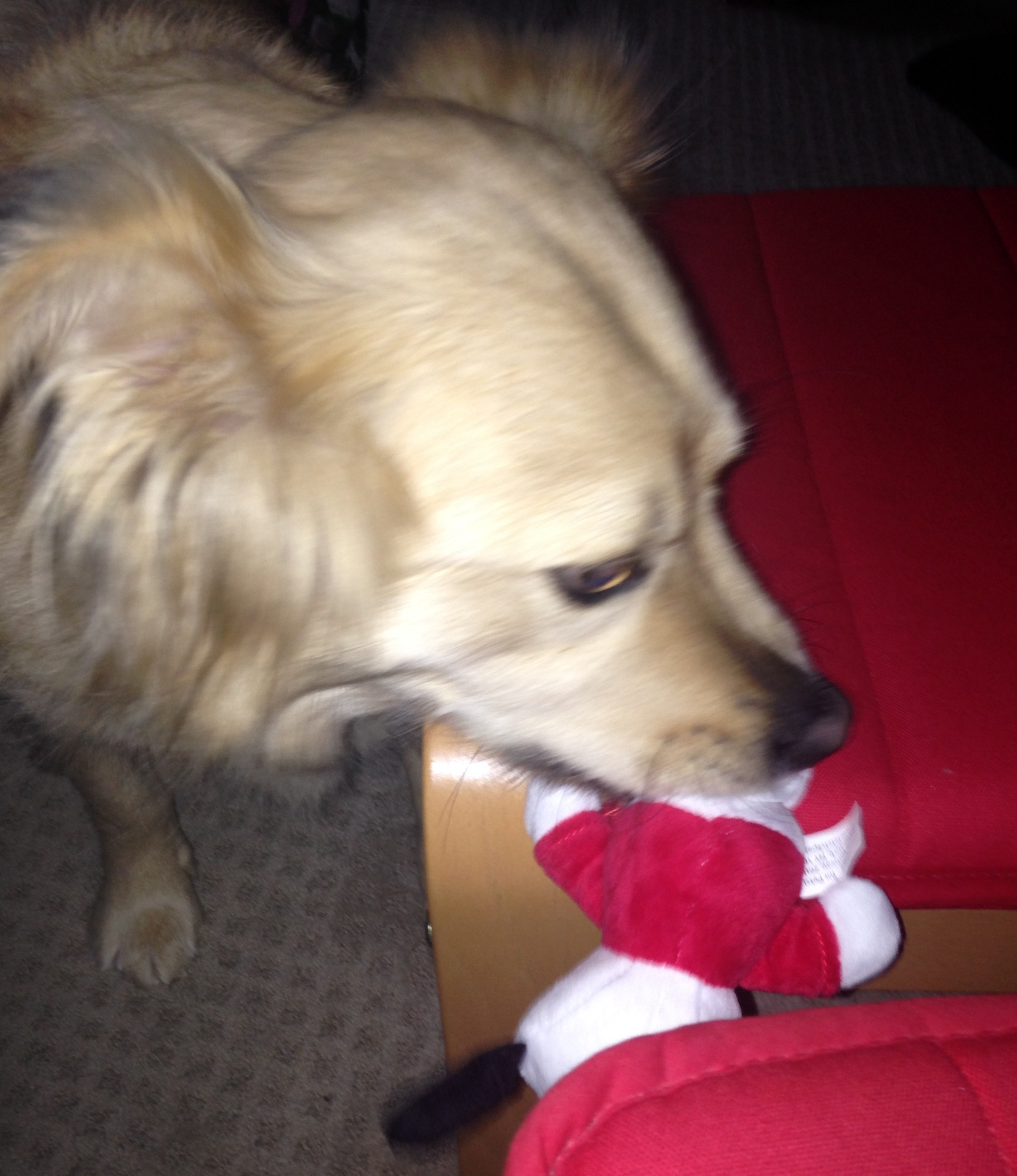
Sofie selected a Snoopy stuffy. Sometimes she reminds me of him with her independent nature.
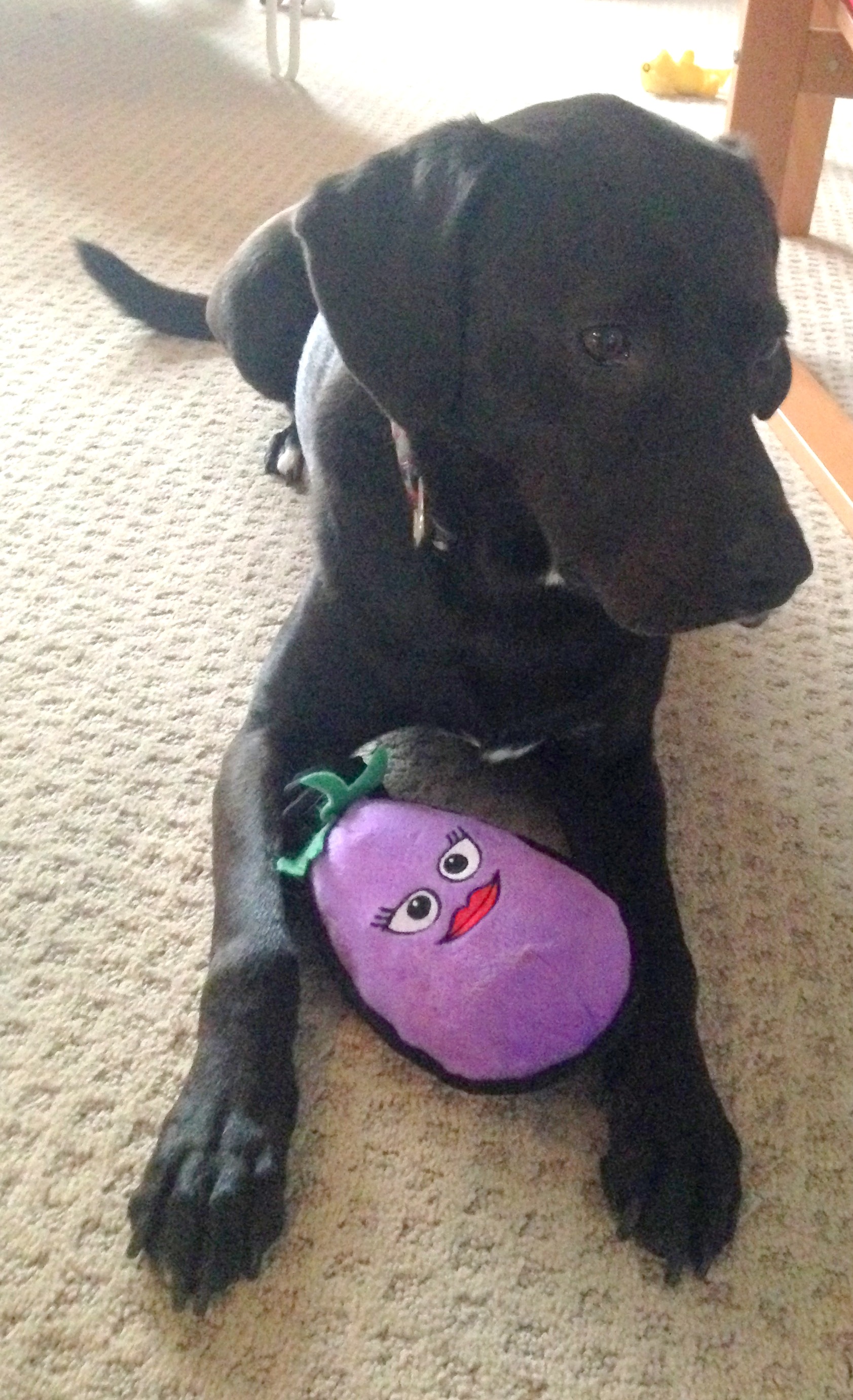
I decided on this yummy looking eggplant. I thought it had a squeaker, because I love noisy things, but it has something heavy and hard inside. Still I like it a lot.
This eggplant is definitely mine and no dog or cat is going to take it from me.
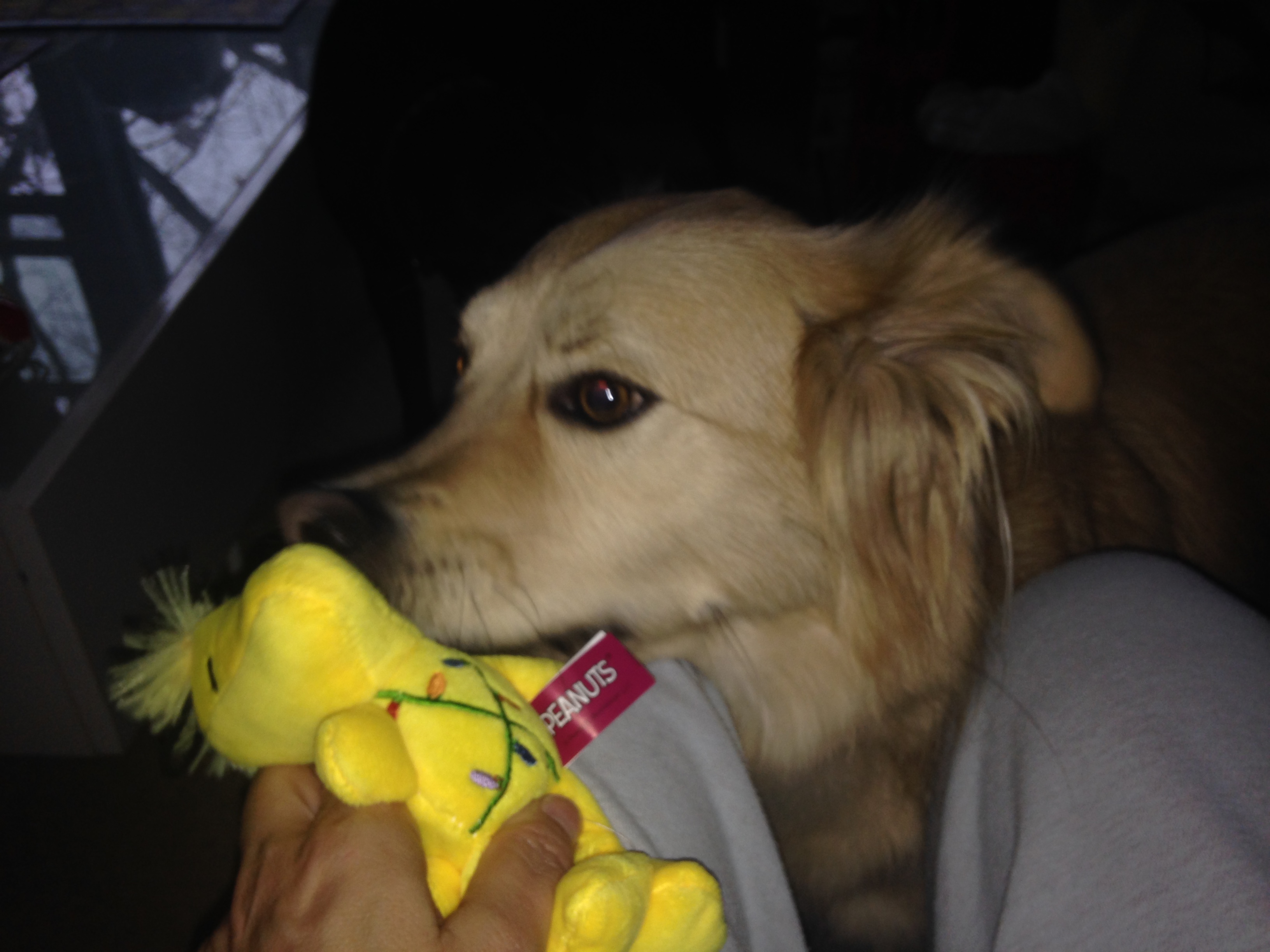
So Mom decided maybe Sofie should have the Woodstock to go with her Snoopy.
“But Mom!!!” I yelled, “I want Woodstock! Sofie gets all the good stuff!”
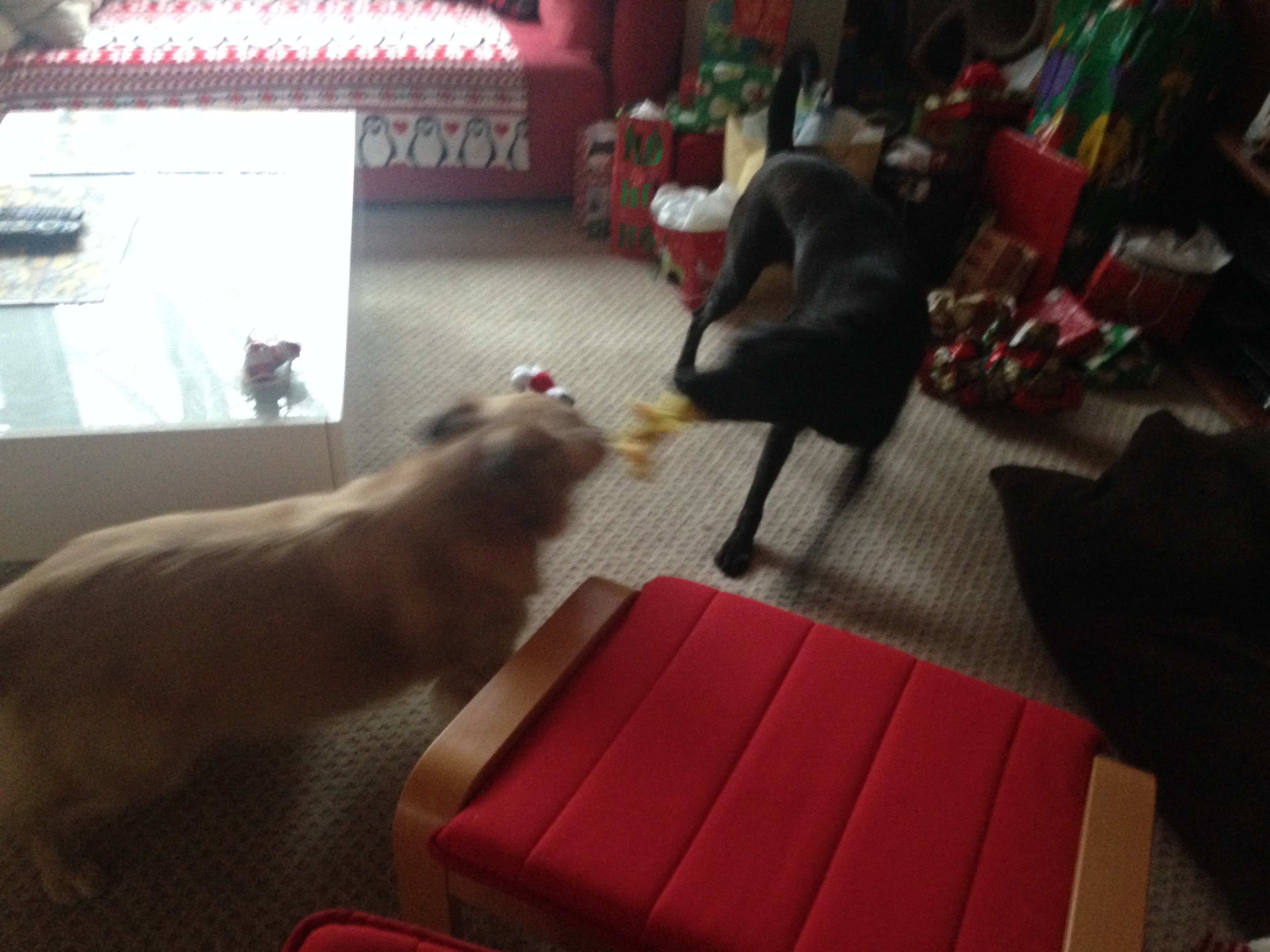
So you know what I did? Right in front of the whole family. I took Woodstock from Sofie.
Sofie can never win when I want something.
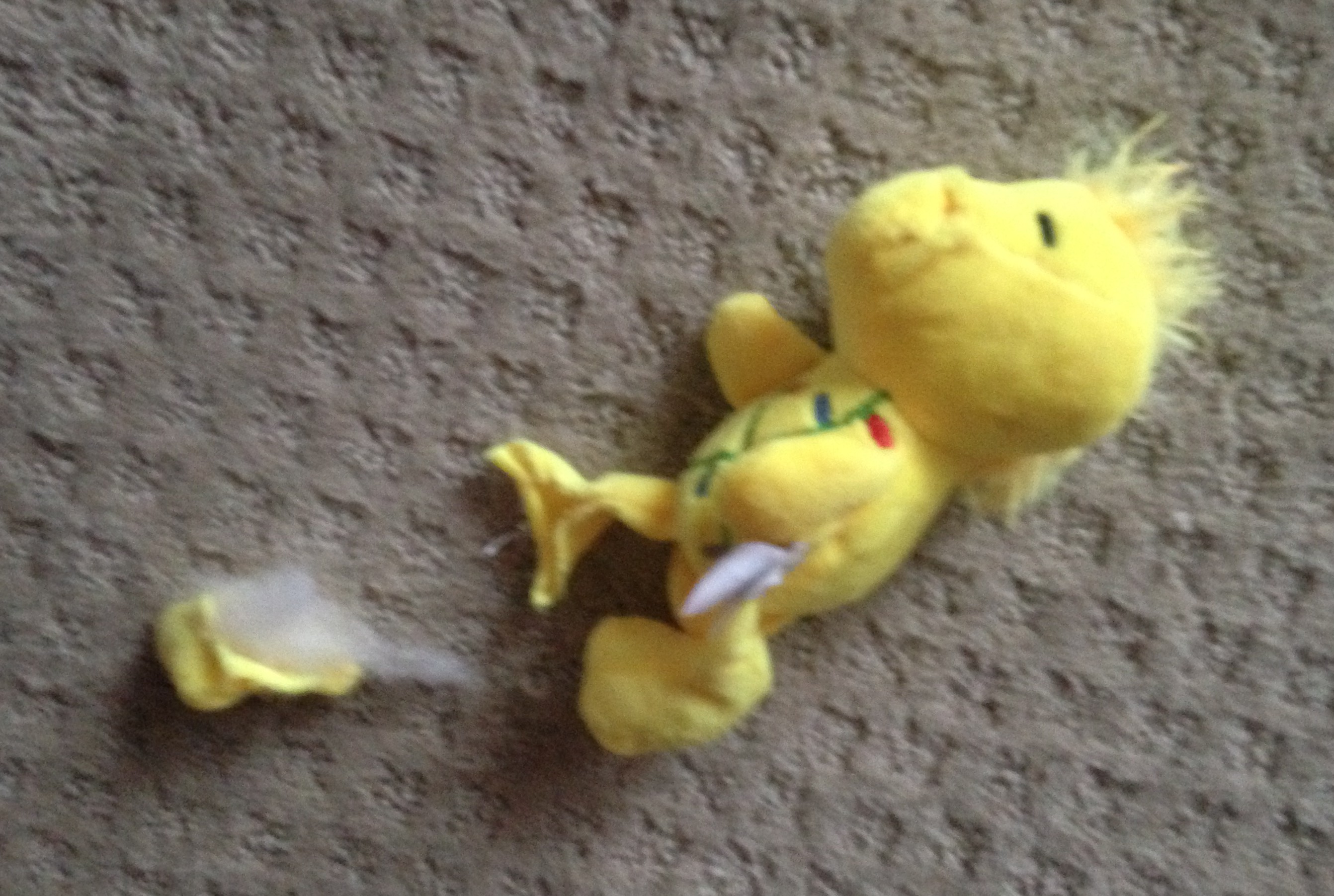
So now we both have part of Woodstock.
I guess my stocking may be empty next year. But actually it is still 2015, so maybe Santa Mom isn’t counting the naughties yet. – Love and Licks – Louise












 DogDaz Zoo