
Mom rolled into the kitchen and this is what she found. Nono hiding behind the curtain in the cat window.
I cannot imagine a life without cats!
Just another CATDogDaz morning at the zoo ❤ 
Just another CATDogDaz morning at the zoo ❤
For the first 14 days after Mom’s surgery, she could not step on her foot. The big dogs were gone and it was very quiet. We helped her sleep. And we helped her work. And we fought over her lap. The first week all she did was sleep but then she started to work lying down. Mini and I would fight every morning to see who could win her lap. Mom called it LapWars: LapTop, LapDog, LapCat. At the end of the week, the score was Charles: 3 Mini: 4. Noel did not try to play, she just wanted to sit next to Mommy on her knee scooter and stare at her. Sadly, the big dogs return on Day 15, so we don’t know if LapWars will be permanently interrupted by Louise and Sofie pushing in to own Mommy. We will see – stay tuned to this channel because next week I am going to rule the lap! (Mom says 2 weeks down and 6 to go before any dog walking is possible). – Reported by Charles, the MugWump

Just another DogDaz morning at the zoo ❤
There is one potential danger during every dog walk that I dread: the approach of the unleashed dog – whether friendly or aggressive.
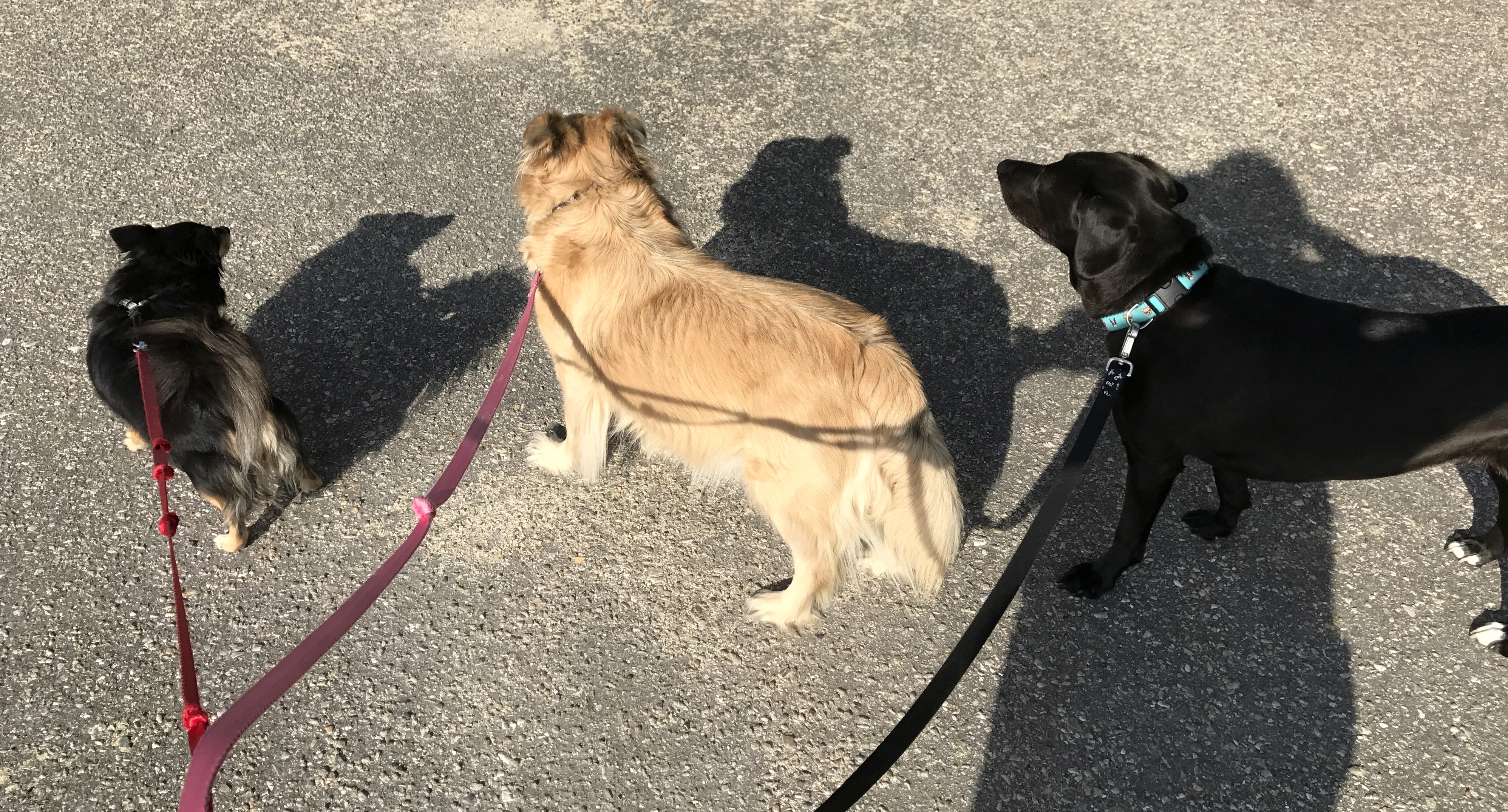
Taking the dogs for a walk has always been an enjoyable bonding experience for me and them. Until I rescued Louise, a fearful dog, I never even realized how stressful a walk could be just around the neighborhood. The stress comes from all the off leash dogs that we encounter along the way, even though my county and community have strict leash laws. Sometimes I feel like I am the only person in the world worried about what is coming around the corner, but I know I am not.
I love my walks with the dogs, don’t get me wrong, but I do my best to be prepared so that my ‘walk bubble’ with the doggies is not interrupted by unforeseen events. I try to:
The dogs and I encounter unleashed dog in the neighborhood all too often (at least once a week). Occasionally it is a dog that darts out the house door or gate, but mostly it is owners who think their dog doesn’t need a leash, regardless of laws, and walks them all over everyone’s property with little control. Then there are the people who are on their own property with their dog, gardening or something but think that their dog will stay there unleashed even if others pass by (which is a lot of what we are encountering lately.)

Most incidents end fine, however, all incidents burst our ‘walk bubble’ no matter how well prepared I am. Though I am always vigilant to warning signs that something is coming, loose dogs can happen upon us very fast. My best warning signs are when one of the dogs starts intense staring down the lane or I see hackles going up. This usually prompts me to either make a quick U-turn or try to put a car or tree between the trigger and the dogs. Lousie and Sofie aren’t growlers and by the time they are barking, it’s too late to take other action. So, even before leaving the house I have a plan about how I will handle the event of an unleashed dog approaching us. I have learned that emergency situations are best actioned when practiced, especially with a 60lb reactive dog, a 55lb anxious pup, and a 15lb biter.
Here is what I do.
 Protect the little guy! Since Charles is <15 lbs and can be killed with one bite, my concern is getting him to safety. I practice picking him up on regular walks to get him used to this type of quick grab (‘Charles, up!’). I know this is not always advised because the approaching dog could then go for him in my arms, but I have not figured out another way to keep him safe and I am dealing with too many size differences to leave him at risk. I do worry that Charles might bite me accidently because he gets freaked in overwhelming situations, but I think that is better then him getting killed.
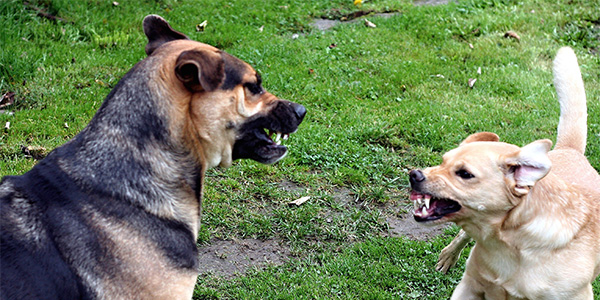 Luckily, we have never encountered a truly aggressive dog on a walk. When that day comes, I do think about dropping the big dogs’ leashes, if I am out of all other options. I want Louise and Sofie to be able to defend themselves. I worry though that because of Louise’s reactivity she would be seen as the aggressor. Believe me, I am not going to test this theory and hopefully will never have to. It is sad that we can’t just stay in our ‘walk bubble’ around my little suburban neighborhood.
Note: I am not an animal trainer or certified animal professional. I am a dog owner telling my story. I am not giving advice, I am only telling you what I do. I recommend that people get training from certified professionals when it comes to aggression or issues with their animals.
Other posts in the Loving Fearful Dog series:
DogDaz Zoo: Loving Fearful Dogs – Was She Abused?
DogDaz Zoo: Loving Fearful Dogs – 4 Control Methods On A Walk
Do you like these kinds of posts from DogDaz Zoo? Let me know and we definitely will try to add more to the series. Thanks for reading.
Just another DogDaz morning at the zoo ❤
Photos: Louise, Sofie, & Charles photos belong to DogDaz.com
All other photos are from Google Images


Just another CATDogDaz morning at the zoo ❤
Understanding a fearful dog has its challenges. The more I understand what makes Louise scared, the better I able to help her manage her behavior. But even after 7 years, I don’t know all of Louise’s triggers. Just when I think that she is calm and able to handle a passing dog, she lunges and loses it. For example, we walked by a parked car yesterday and there was a lady sitting in it with her window down. The dogs and I didn’t see the lady. As we started to walk past, close to the driver’s side, the lady said out her open window “hello.” That startled Louise and she reared and growled and barked. It feels like 2 steps forward, 1 step back, much of the time.

Here is my list of Lulu’s fear behaviors:
My theory about why she is so fearful goes back to her possible lack of socialization during that critical sensitive period of puppyhood at 6 to 10 weeks of age (see my recent post on this topic). I think that she was probably left alone in a barn or a field, or under a rock, with maybe her mom and sister and had very little human interaction in her early weeks. Since there was a collar embedded in her neck when she was rescued, clearly someone put the collar on her and then ignored her as she grew bigger over the weeks. I rescued her at about 20 to 24 weeks, so the lack of socialization already imprinted her fear center by that time.
Today Louise is afraid of strange people and animals. I noticed that she is more fearful of men than women (which I understand is common). She definitely does not like people in hats, male or female. She has not been around children much so I don’t know if she is fearful of them, but she definitely is afraid of adults. I wonder about racial differences, but she appears to be afraid of everyone equally. She is fine with dogs that she does not know at the dog park when off leash, but can have a fear reaction to the same dogs when walking by on leash. She has specific dog friends in the neighborhood that she is fine with and then there are certain dogs that just make her see RED. I guess experts would classify her has clearly ‘leash aggressive.’
Managing the Fear
I am a big proponent of avoidance and distraction. When I see someone walking a dog toward us, I try if possible, to turn around and walk the other way. This way Louise never gets close enough to enter what I call her Red Zone. There is a certain distance at which she will start to show stress. She can manage to hold it together only for so long and then she enters the Red Zone from which there is no coming back. The weird thing is that it is not with all dogs or people, so I never know exactly when she is going to blow. She really hates big white dogs, but one of her best friends is a white Shepard mix. She doesn’t like the little yappy dogs around the neighborhood (Havanese, Lhasa Apso, etc.) but she doesn’t mind the old blind pug or the scrappy loose mop that lives down by the river. If she knows certain dogs she can be fine with them, but not all dogs. She is actually fine at the dog park off leash.
When walking Louise I try to be very aware of what is coming and going around us. I try to anticipate what is around the corner whenever possible. The more distance I can have between us and a stranger or strange animal, the better able I am to reduce her fear and stress. When frightened on a walk, Louise tries to make the scary thing, person or animal, go away by growling, barking, and/or lunging. My method is first to try and remove her from the situation. When unfamiliar dogs are coming towards us, I turn around, walk down another street, sometimes, if trapped, I will walk up someone’s driveway and keep Louise’s focus on me. I think it is weird but many dog people don’t understand that when I turn around and walk the other way (with 3 dogs in tow), I am trying to avoid them. Many times those people will follow right behind us or cut us off as I round the street (my neighborhood streets all loop around because we are a peninsula). When I can’t avoid a strange dog there are a few things I do. First, I make everyone sit and look at me until the dog/person passes. Louise is better if the stranger is in front of us (which makes sense so she can see them). Sometimes, I place my body in her line of sight to force focus on me. Then, once they pass, I can move along at a safe distance. When a runner or walker or even a car comes by, I always have the dogs sit and wait until they pass. For me, keeping everyone under control is critical for their safety, mine, and of course, the stranger/strange animal. Having all dogs ‘sit stay’ is my key, not that I trust that Louise won’t lunge if not watched.
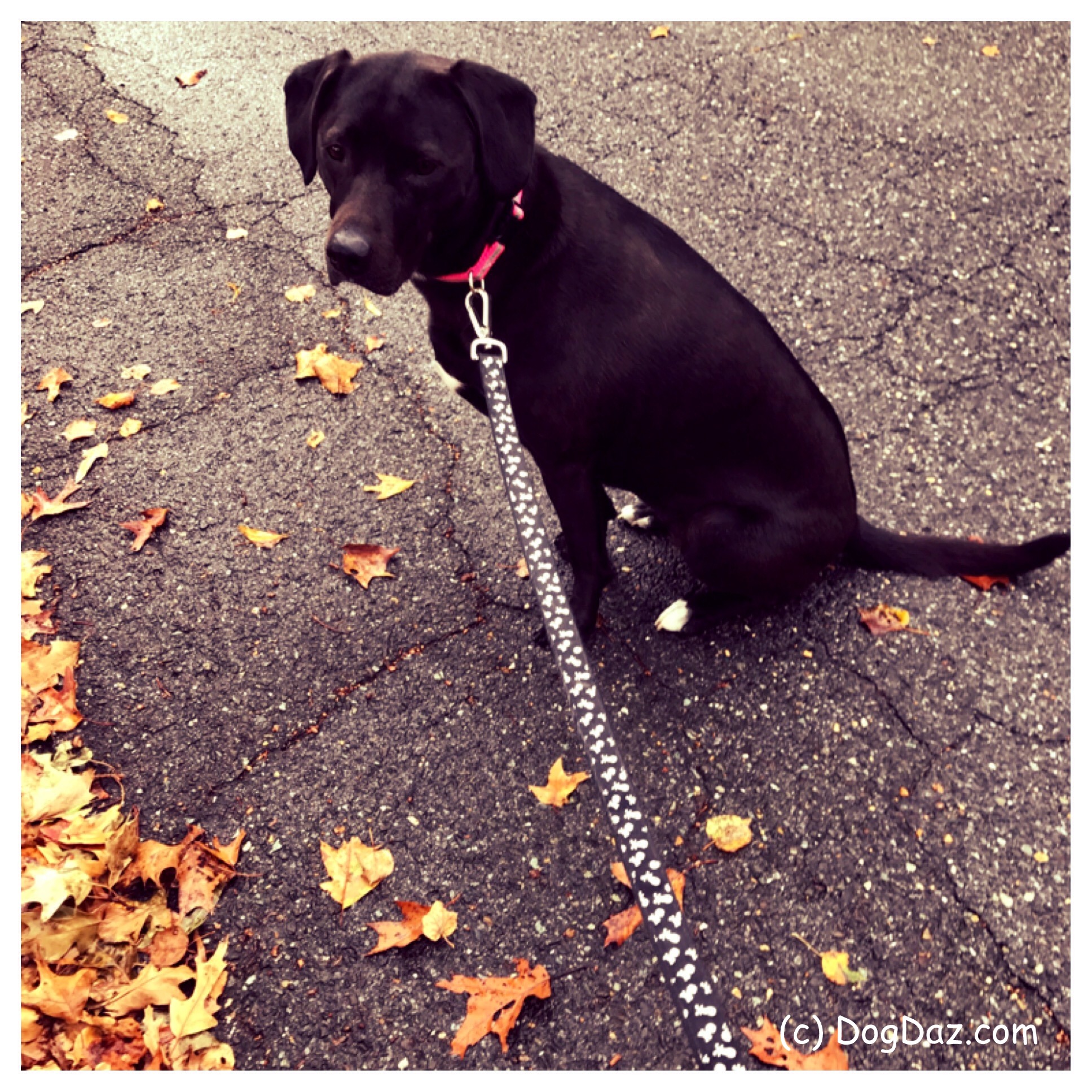
A mistake that I used to make was to tighten up on her leash when walking past things that I knew scared her. This was so I could control the lunge if it happened. However, I think that my tension traveled down the leash to her and reinforced her negative behavior. Now I try to be more aware of just moving along and not reacting. I want to believe that the leash is not the control mechanism between me and my dog, but, sadly, when Louise sees red, no words seem to keep calm or control a fearful dog.
I can feel the dog tension when there is an outside cat, fox, or squirrel nearby. I just keep walking and try to have them ignore the critter. Squirrels can be very stupid (as we know) and I have even had foxes come directly in front of the pack without a care. This is not so easy to handle other than using my ‘ignore’ command. When they ‘ignore’ something like this, they get a treat. It really depends on how close the threat. Too close nothing works other than to get out of the zone as quickly as possible to regain equilibrium.
Finally, I practice what I call the ‘look at me’ technique. Giving her a treat when she focuses on me. When she looks in my eyes. Every chance I get, I try to reinforce her ‘looking at me’ for guidance and direction. My hope is that by her focusing on me, which is safe, she can calm down enough to move along.
Distance, avoidance, distraction, and focus. These are the tools in my Louise bag.
If your dog is leash aggressive and fearful you might want to consider a professional trainer to help you with getting control of the situation. If a walk is not fun for you, it surely no fun for your dog.
Just another DogDaz morning at the zoo ❤
Mom is away on a business trip, so we are reposting one of our favorite Caturday’s from years gone by. Hope you enjoy.
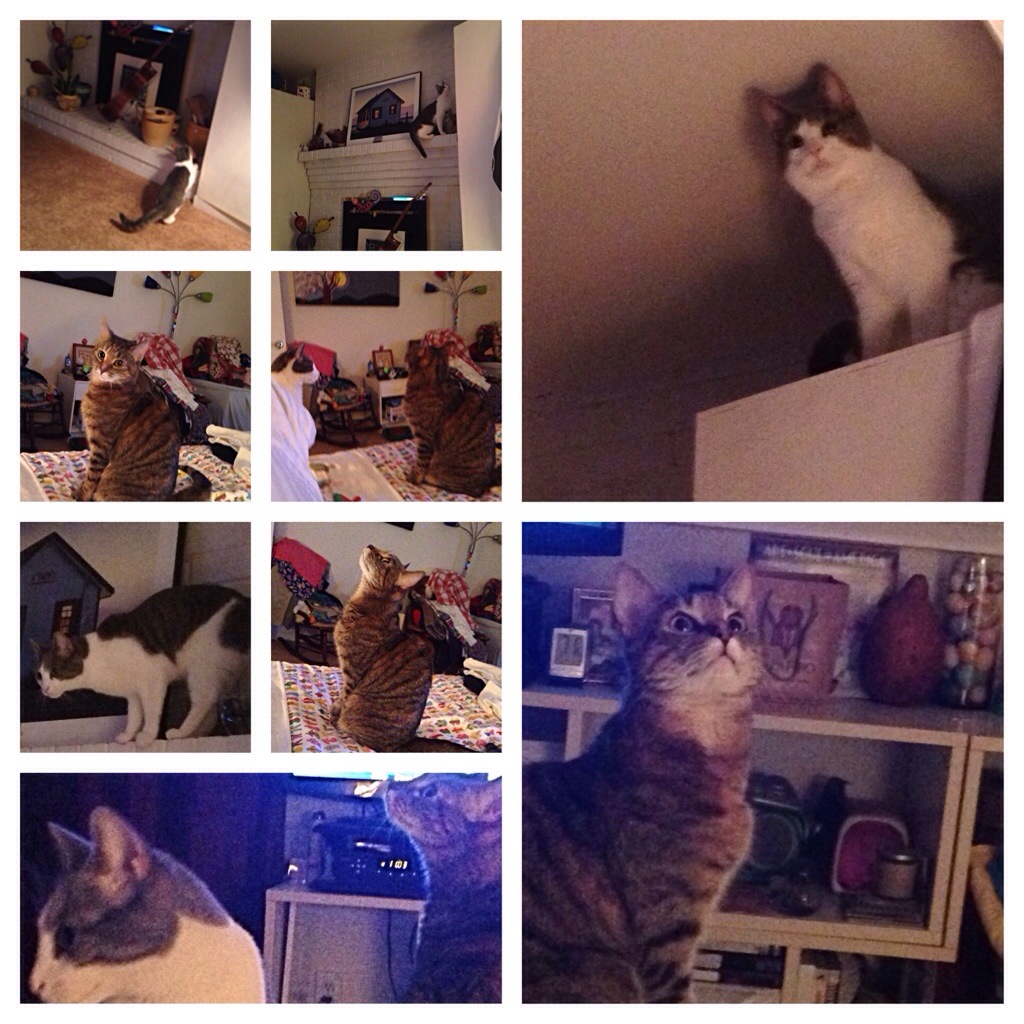
I was trying to go to sleep last night and the kitties discovered a Cranefly over my bed.

They spent a good hour trying to catch it. I don’t know if they every did because I finally turned out the light.
Just another CATDogDaz morning at the zoo ❤

Puppy Louise
Rescuing animals, especially when they are several months old or older, means that you will never know how they were treated in their early formative weeks. Because of her fearful behavior, I thought that Louise might have been abused as a puppy. She came into our lives when she was 4 or 5 months old. Louise was fearful and shy from the moment we met her. Her foster said that she had a collar embedded in her neck and she was covered with Demodex (red mange). The rescue had liberated Louise and her sister, Thelma, from some guys in a pickup truck in the parking lot of a kill shelter down in South Carolina. Based on this story, I assumed she was neglected, if not worse, in her early months. Recently, I am rethinking that idea. I have been reading about the critical socialization time for puppies that occurs between 6 and 10 weeks. This is called the ‘sensitive period.” Before 6 weeks, puppies see everything in their world as good. This is the time that they associate smells and other things potentially as good stuff for the rest of their lives. Then around 5 or 6 weeks FEAR sets in.
In an article on early socialization, Dr. Sophia Yin, DMV, said that puppy’s need to be socialized as early as possible but definitely “before five weeks of age because by five weeks the puppy is showing fear responses to people, objects and other unfamiliarity around them.” She stresses that if socialization doesn’t start before 14 weeks of age “many puppies will be doomed to a life of fear” unless they go through a regimen of intense socialization. I wish I know this when I first rescued Louise because Dr. Yin’s message is clear, that socialization in the sensitive period “can be the difference between having a happy, well-adjusted dog to one who is fearful of people, objects, other animals, and various environments that we humans perceive as safe.”
You can read more regarding one of the most important studies done around early socialization in different breeds detailed in the book ‘Genetics and the Social Behavior of the Dog’ by John Paul Scott and John Fuller, published in 1965 (Scott and Fuller, 1965).

Louise 1st Photo
Instead of early abuse, maybe Louise was not socialized during her most sensitive development stage and that is why she developed her life-long fears. Louise is leash aggressive and afraid of strangers, both human an canine. Though I have worked with her to manage her behavior in stressful situations, it would really help if I understood the root causes.
When you rescue, it is rare to know what happened during that critical puppy time. Maybe when she was still little there were additional things I could have done to change that fear imprint. Over the years, I have done much to quiet her fears and provide a safe and supportive environment in which she has flourished. She is a very happy dog at home but fearful, especially on a leash, and needs special attention. Are there ways to undo the emotional damage in dogs?
To be continued…..
Just another DogDaz morning at the zoo ❤
Just another CATDogDaz morning at the zoo ❤
Just another CATDogDaz morning at the zoo ❤
Just another CATDogDaz morning at the zoo ❤
 DogDaz Zoo